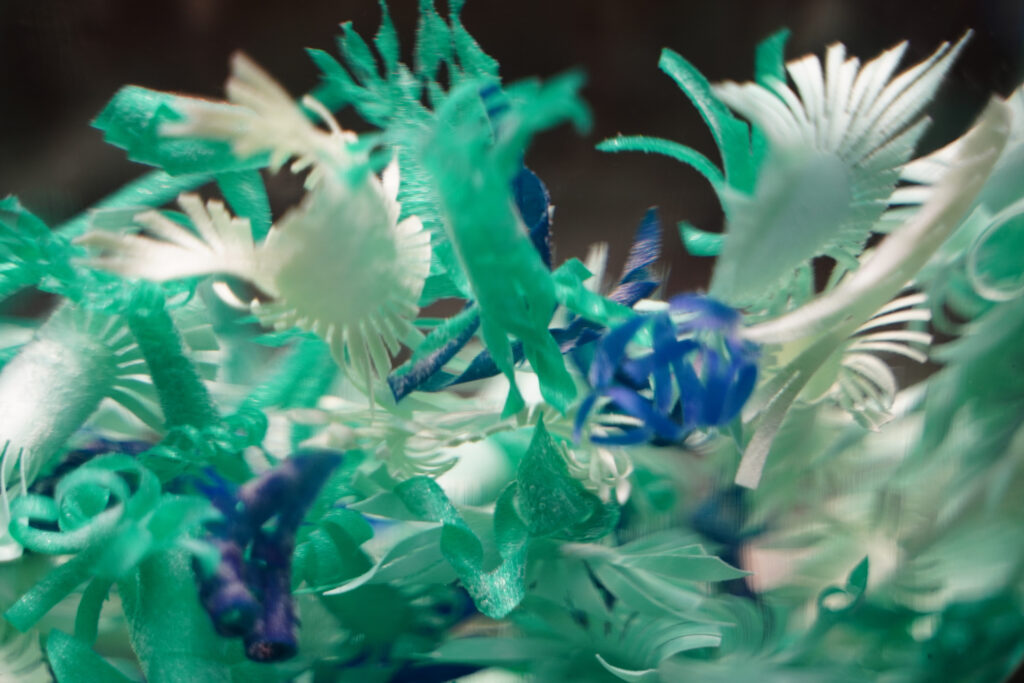
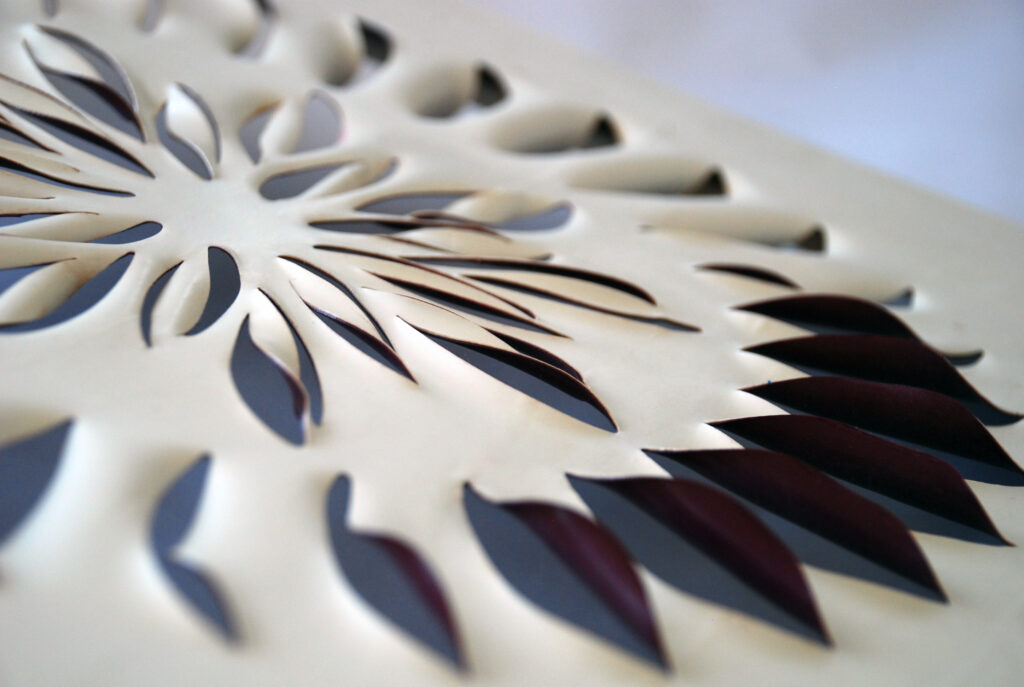
The Hebrew University, in collaboration with the Bloomfield Science Museum Jerusalem, presents “Automorphia”, an exhibition showcasing self-shaping materials inspired by nature. Opening February 20, it demonstrates how materials can morph without the application of external forces, paving the way for sustainable design and innovation. Self-shaping materials are advanced substances that change their form autonomously, eliminating the need for motors, manual assembly, moulds or applied pressure. Drawing inspiration from nature—such as the way plant leaves curl in response to humidity or how proteins fold into intricate shapes—these materials leverage internal properties like differential expansion, programmed stress, or chemical reactions to morph dynamically. “Automorphia” invites visitors to discover how these principles can revolutionize engineering, architecture, and industry, leading to more efficient and sustainable design solutions. By reducing material waste and energy consumption, self-morphing materials present a transformative alternative to traditional manufacturing, showcasing how science can emulate nature to create smarter, more adaptive technologies.
The Hebrew University of Jerusalem is proud to announce its collaboration with the Bloomfield Science Museum Jerusalem for the launch of Automorphia: Emergent Forms, an innovative exhibition opening on February 20. This exhibition showcases groundbreaking research from the Hebrew University’s Racah Institute of Physics, led by Prof. Eran Sharon with Dr. Arielle Blonder from the Technion – Israel Institute of Technology.

Automorphia invites visitors on a fascinating journey into the natural principles of self shaping — where forms and structures emerge spontaneously without the application of external forces. Unlike traditional industrial manufacturing, which often requires complex, resource-intensive processes, nature demonstrates an elegant efficiency, forming intricate and functional structures through internal material dynamics.“
This exhibition illuminates how natural self-forming processes can guide design and engineering, offering a more efficient and sustainable approach to creating materials and structures,” said Rony Ben-Chaim, CEO of the Bloomfield Science Museum Jerusalem. “We are thrilled to collaborate with Prof. Eran Sharon’s lab at the Hebrew University to bring this vision to life.
The exhibition features a diverse array of scientific and artistic installations, demonstrating how self-shaping principles can be harnessed in industrial materials, architectural design, and beyond. From plant-inspired hygroscopic structures that respond to humidity to advanced self-morphing ceramics and composite materials, Automorphia provides a glimpse into a future where material science draws inspiration directly from nature’s own innovations.
Prof. Eran Sharon, from Hebrew University who co-founded the Automorph research group with Dr. Blonder from the Faculty of Architecture at the Technion Israel Institute of Technology explains: “Industrial manufacturing processes treat solid materials as static and passive entities shaped by external forces. As a result, many of these processes are inefficient, wasteful, and produce excessive material waste. In contrast, nature demonstrates that materials can be active participants in shaping through growth. If we can apply self-design principles to industrial and architectural materials, we can create more efficient, sustainable, and dynamic products with natural properties. We chose to present these technologies through a variety of exhibits—some engineering-focused, some artistic or design —to showcase their versatility and potential applications.”
The exhibition is supported by the Jack, Joseph and Morton Mandel Foundation and the Jerusalem Foundation.